
Early and Mid-Stage Dementia: A Family's Guide to Understanding Care Needs
Families searching for care after a dementia diagnosis often want clarity on what the different stages mean and what kind of support each one calls for. Women in early or mid-stage dementia generally do best in environments built around structure, safety, and emotional comfort. Understanding how needs change between stages helps families choose the right support at the right time, while protecting dignity and quality of life.
This guide explains how care needs typically progress, why women's experience of dementia often looks different, and what to look for when evaluating options in Florida.
Why Care Environment Matters
Cognitive changes affect independence gradually and unevenly. Settings built for people living with dementia tend to emphasize predictable routines, close familiarity between residents and caregivers, and activities that support engagement and daily comfort. That structure matters more as dementia progresses, because familiarity does a great deal of the work that memory can no longer do.
Understanding Dementia in Women
Women account for a majority of people living with Alzheimer's disease in the United States, which means care approaches often need to account for their specific experience. Longevity is part of the explanation; researchers continue to study hormonal and other biological factors as well.
Common Symptoms in Early-Stage Dementia
Early symptoms are often subtle: short-term memory lapses, difficulty holding focus, trouble finding familiar words, or misplacing things in unusual places. Many people compensate well at this stage, which is part of why early dementia is so often missed or dismissed.
Common Symptoms in Mid-Stage Dementia
In mid-stage dementia, changes become harder to work around. Confusion about time and place grows more frequent, speech patterns shift, and everyday tasks that were once automatic start requiring help.
Behavioral and Emotional Changes
Mood swings, anxiety, irritability, and withdrawal from social settings are common across both stages. These changes are part of the condition rather than a matter of personality or willingness.
Challenges with Daily Activities
Dressing, grooming, cooking, and organizing a day can each become difficult. Good care planning works from the specific tasks a person is finding hard rather than from a general stage label.
What Support Typically Looks Like at Each Stage
Early-Stage Support
In early-stage dementia, most people remain independent in many areas and need prompting more than hands-on help. Support usually means medication reminders, gentle cueing, help keeping a routine, and structured activities that give the day shape. The goal is preserving independence for as long as it is genuinely there.
Mid-Stage Support
Mid-stage dementia calls for more hands-on assistance through the day: help with dressing, grooming, and bathing, closer attention to health changes, and predictable routines that reduce stress. Caregiver involvement increases, and consistency of caregiver becomes more important than it was earlier.
Care needs shift over time, and a plan written at admission will need revisiting. Families should expect to have that conversation more than once.

What to Look For in a Care Setting
Routine and Activity
Structured days reduce confusion. Look for activities that fit the person in front of you. Conversation, music, gentle movement, crafts, familiar household tasks, rather than a generic calendar.
Emotional and Social Connection
Familiar surroundings and consistent caregivers reduce anxiety. Ask how often staff change and how long caregivers typically stay. High turnover undoes much of what a good environment provides.
Safety
Ask specific questions: how the home handles falls, how medications are managed, what happens overnight, and how staff are trained to respond to confusion or distress.
Fit With the Person
The best setting is the one that matches how your loved one actually lives — how social she is, how much noise she tolerates, what her day has always looked like.
Inclusive Daily Living Support
Assistance includes grooming, bathing, dressing, and mobility support while maintaining dignity and choice.
Social Engagement
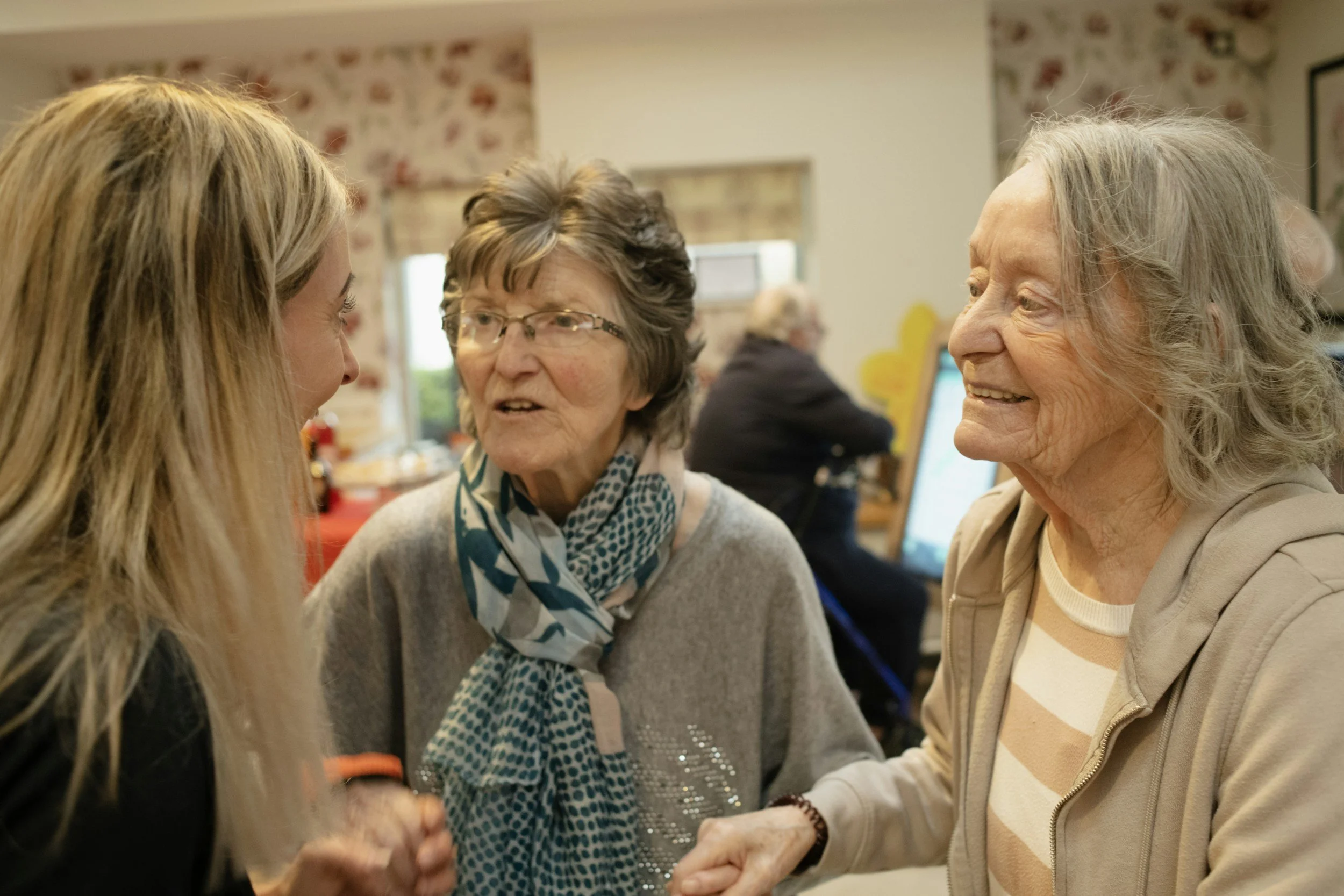
Women participate in daily activities that promote social interaction, creativity, and emotional well-being.
Small Homes and Larger Communities
Small residential homes and larger communities offer genuinely different experiences. Smaller settings mean less stimulation, fewer people to keep track of, and more consistency in who provides care day to day. Larger communities typically offer more amenities, more organized programming, and more staff on site.
Neither is better in the abstract. For someone who finds crowds and noise disorienting, a small home can be considerably calmer. For someone who thrives on activity and variety, it may feel limited. It's worth touring both kinds before deciding.Finding the Right Memory Care Solution for Your Loved One
Questions Worth Asking on a Tour
What is your license type, and what does it allow you to provide?
What happens when my mother's needs increase? At what point would she need to move?
What training does your staff have in caring for residents with cognitive changes?
How many residents do you serve, and how many caregivers are on duty?
How do you communicate with families about changes?
That first question matters more than families usually realize. Florida assisted living facilities hold different license types, and those licenses determine what services a home is permitted to provide. Ask directly, and ask what the license means in practice.
About New Moon Senior Living
New Moon Senior Living is a five-bed residential assisted living home for women in Eustis, Florida, operating under a Standard license. We provide housing, meals, and personal care in a small home setting, help with the activities of daily living, medication assistance, and the kind of attention that is possible when five women share a home rather than a building.
We are not a memory care facility and do not hold a specialty license for the care of residents with Alzheimer's disease or related disorders. Some of the women we serve are living with early cognitive changes; whether our home is an appropriate fit is a conversation we have honestly with every family, based on the resident's needs and what our license permits.
If you're weighing options for a mother, sister, or aunt and want a straightforward conversation about whether a small home makes sense, we're glad to talk, including if the answer turns out to be that a different setting fits better.
Assisted Living Facility #14113
24548 Calusa Blvd, Eustis, FL 32736
(407) 274-3634